Breaking Rohde & Schwarz AMIQ License Keys - the Hard and the Easy Way
Or better: the fun and the unsatisfying way…
- Introduction
- How AMIQ License Keys Work
- An Easter Egg
- Reverse Engineering the License Check
- A Funny Disabled Master Key
- Using Codex
- Conclusion
Introduction
One of the guilty pleasures of playing with old test equipment is to enable all functionality that’s reserved for a different model number or disabled by a license key.
Sometimes this requires a small HW modification; I just upgraded my Agilent 54831B to a 54832B by removing one resistor, but it’s more common now to do this in software: I don’t think there’s a single hobbyist owner of a Rigol oscilloscope who hasn’t done an upgrade to a higher bandwidth version. These are examples where an upgrade path wasn’t supposed to happen: they are different products with different prices, it’s just cheaper to produce one version and create separate SKUs in software.
Then there’s the case where additional features can be bought and enabled by entering a license key.
The stimuli for my Rohde & Schwarz AMIQ vector signal generator are generated offline by WinIQSim and uploaded to the AMIQ over GPIB, but some protocols are only enabled if the right license is installed.
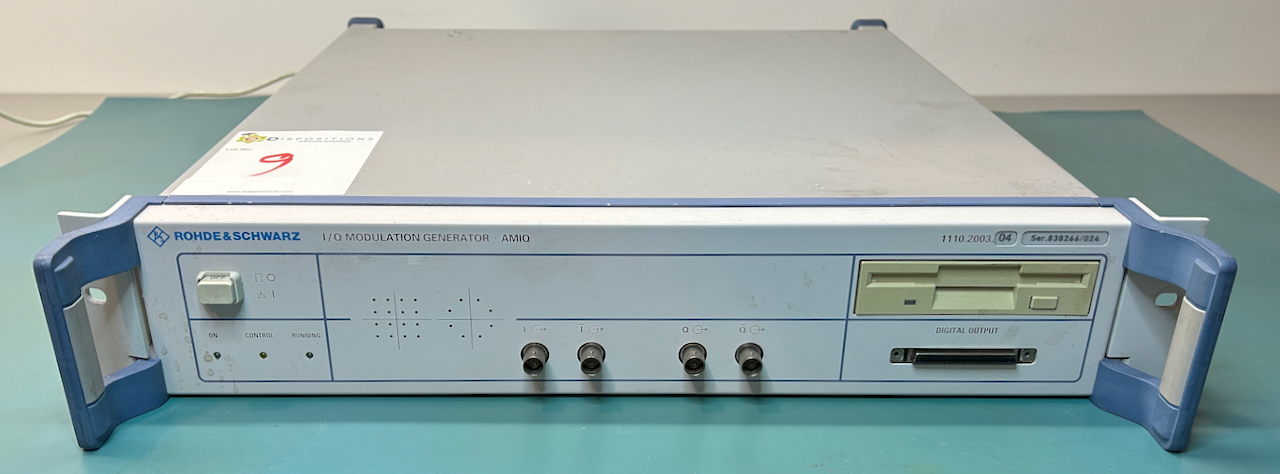
I have no use for these features, but the thought of not having them enabled is unbearable. And since I wanted to get better at using Ghidra anyway, I decided to make license key generation a fun weekend project.
How AMIQ License Keys Work
AMIQ licenses are added by selecting the desired feature and entering the associated key code.
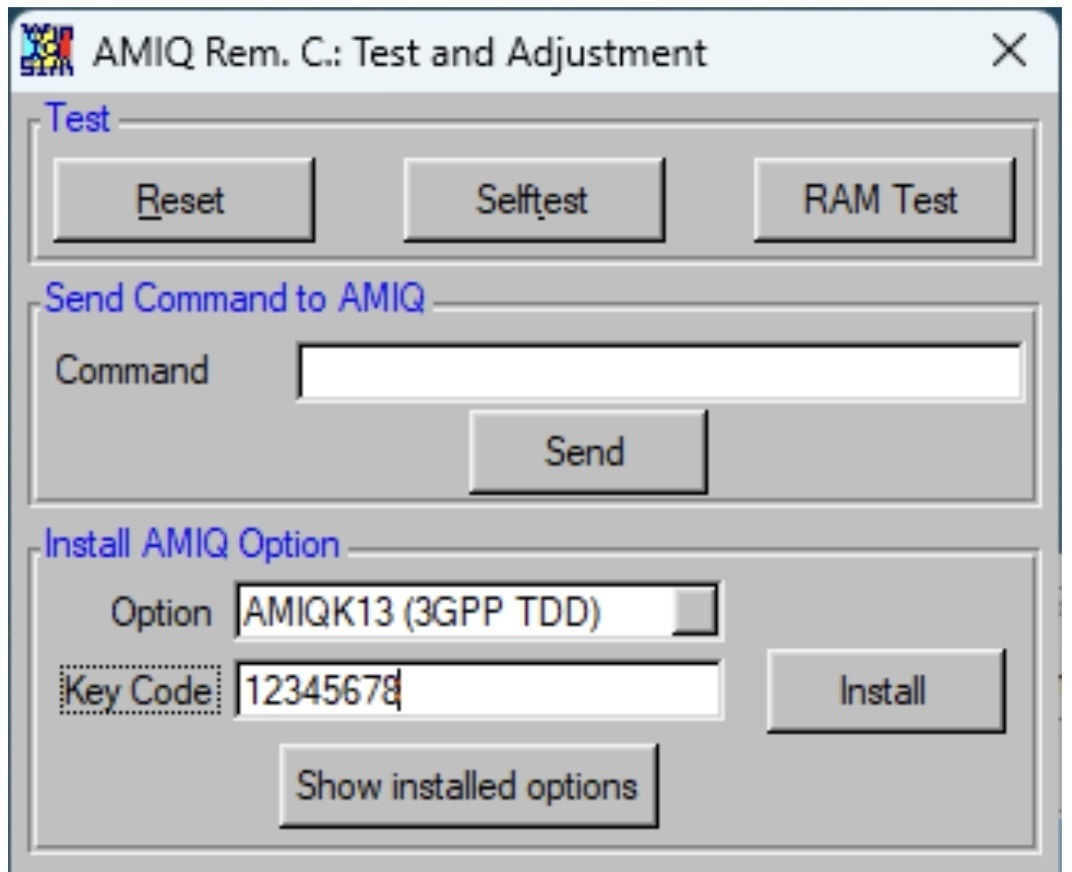
WinIQSim doesn’t do anything with the key other than passing it on unchanged to the AMIQ, over RS-232 or GPIB, with an SCPI code. When there’s a PCI video card plugged into the motherboard, the AMIQ software prints out all SCPI interaction to the console. That makes it really easy to observe what’s going on:

It’s good that WinIQSim doesn’t do any license key manipulation, this limits our effort to the executable on the AMIQ itself.
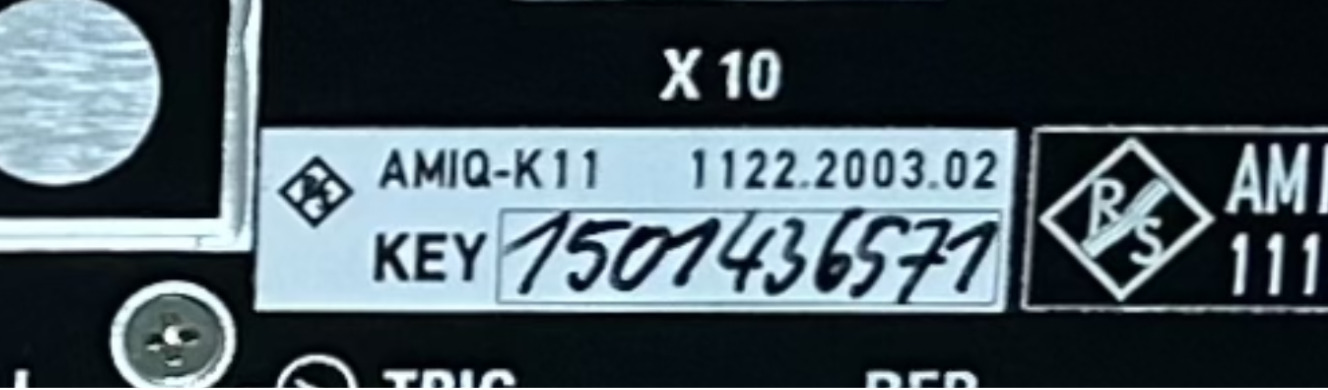
Real world license keys are useful to verify that you’ve correctly reverse engineered the algorithm. It’s trivial to find these: R&S prints them on labels on the back of the unit. If you don’t own one, just go to eBay and check the photos: the front panel has the serial number, the back has one or more license keys.
Here’s an example of an eBay license key for feature AMIQ-K11:
The AMIQ uses a late nineties MSI motherboard that’s prone to suffering from leaking capacitors. I had to replace all of them on mine. 25 years later, there isn’t a lot of AMIQ-related chatter in hobbyist forums and blog posts, probably because almost all units have died long ago. Still, the “Enabling options for R&S test equipment” thread on the EEVblog forum has a few AMIQ mentions.
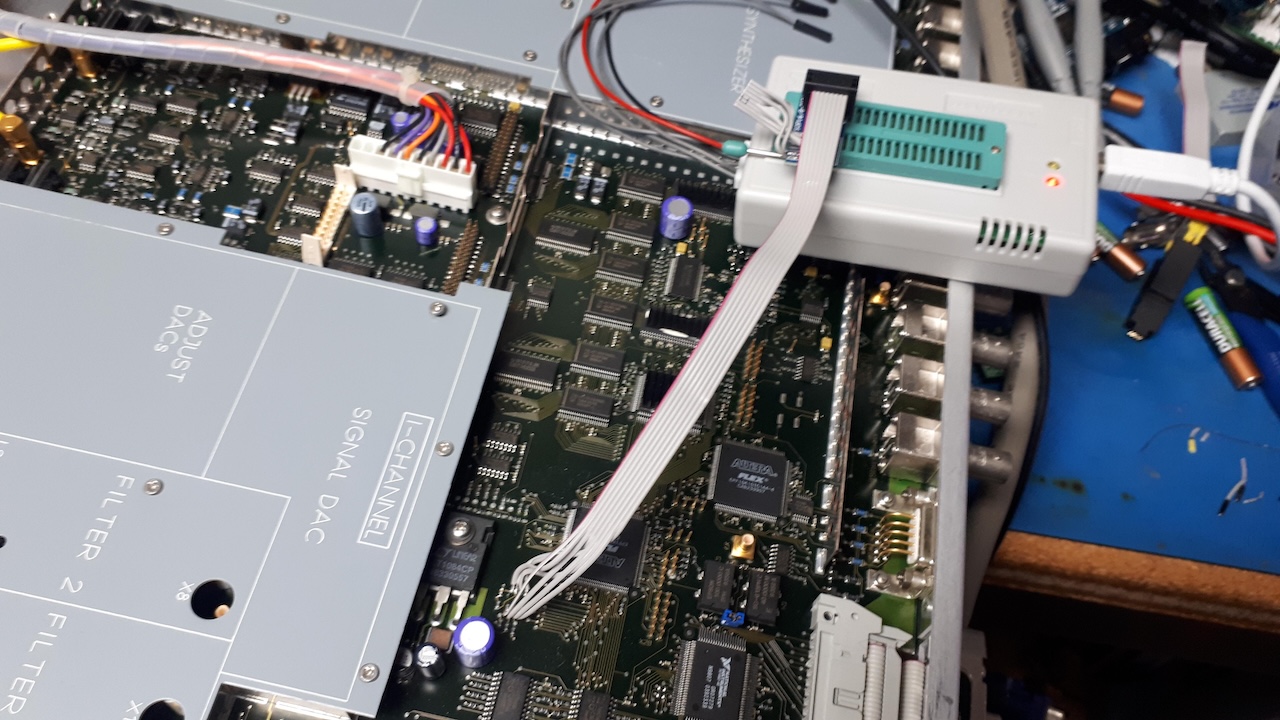
If you don’t mind getting your hands dirty, you can patch an EEPROM on the AMIQ signal generation board to change feature activation, as discussed here:
But someone also posted this nugget:
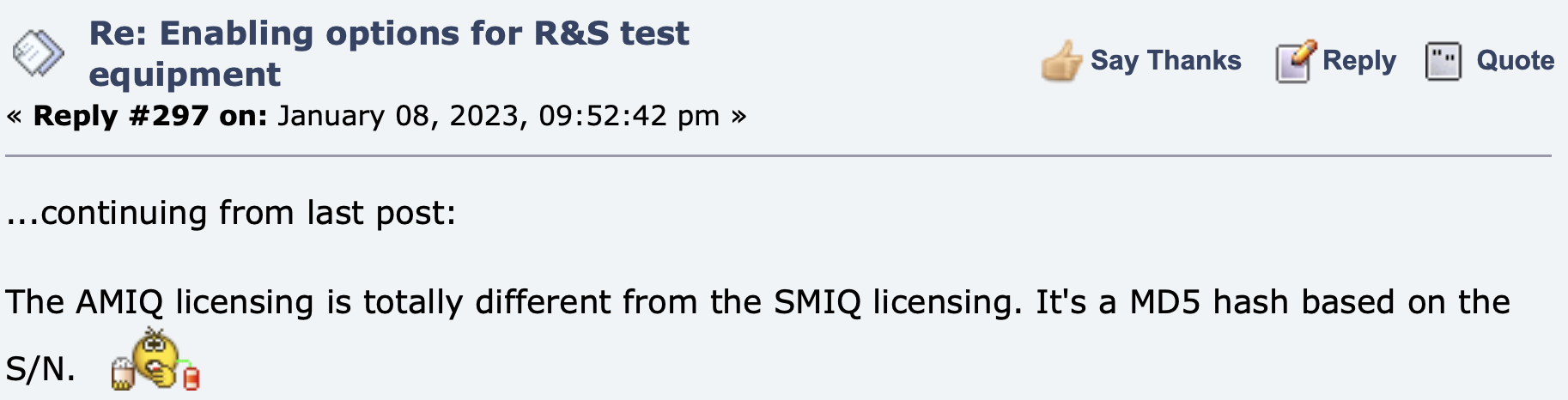
That’s a useful piece of information, because the MD5 hashing algorithm uses 4 initialization variables:
// Initialize variables:
var int a0 := 0x67452301   // A
var int b0 := 0xefcdab89   // B
var int c0 := 0x98badcfe   // C
var int d0 := 0x10325476   // D
These constants are breadcrumbs to locate MD5 code in a binary. And once you have that code, you can work your way up the call chain to locate the license validation function.
AMIQ disk images can be found on sites such as KO4BB.
The main executable is AMIQMAIN.EXE. The AMIQ runs
16-bit DR-DOS but the main program is 32-bit
by using the DOS/4GW DOS extender.
To reverse engineer, Ghidra is still the tool of choice. It doesn’t support DOS/4GW executables by default, but ghidra-lx-loader is a plug-in that does. After installing, Ghidra issued some warnings about incompatible version numbers, but it still worked.
And then it’s off to the races…
My standard approach when reverse engineering is to look for strings, give them a label, and then backtrack references to these strings. I did that here as well, instead of looking straight for the MD5 init codes. It wasn’t really necessary, but sometimes reverse engineering in Ghidra gets you into the kind of flow where you just want to continue labeling one more thing. It’s a bit like playing Civilization and not being able to stop.
An Easter Egg
Here’s one of the strings that I ran into:
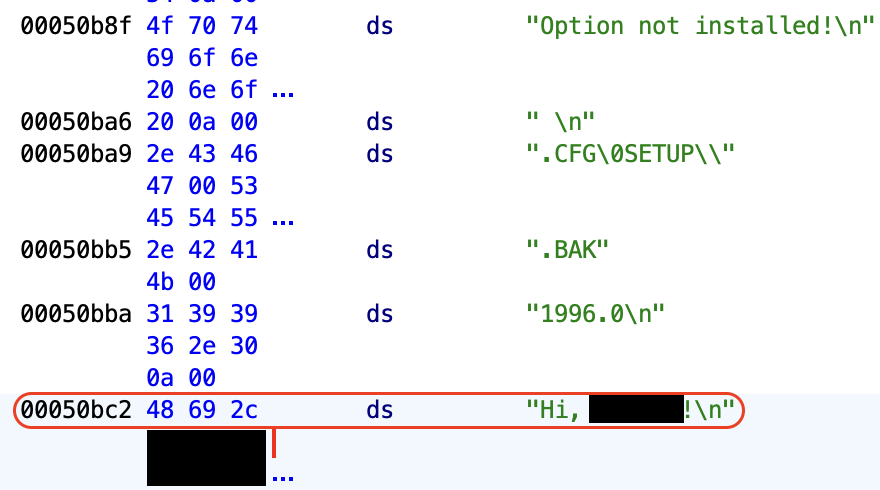
The blacked-out section was an unusual name from literature. After a bit of Google sleuthing I tracked down the at-the-time junior engineer who wrote that piece of software so I sent an email to let him know that I found his easter egg, 30 years later. He replied the next day:
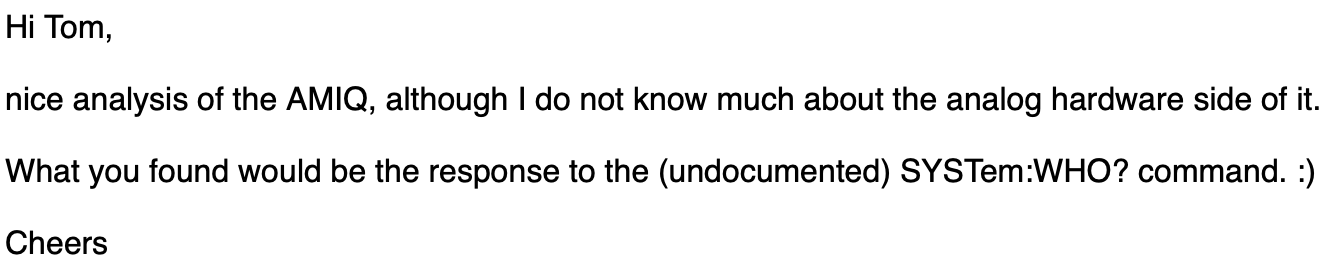
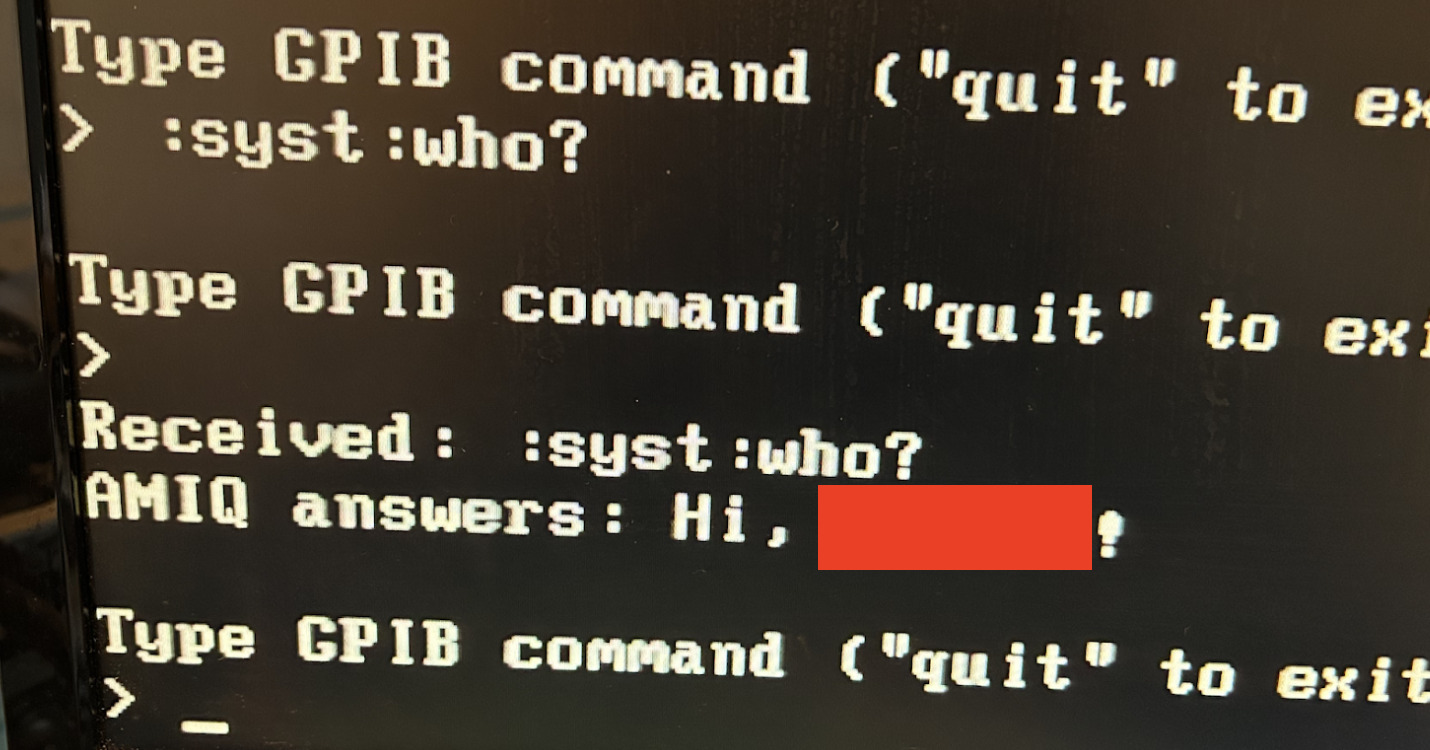
And indeed:
Reverse Engineering the License Check
Time to start the real work and hunt for the MD5 code.
Yes, it’s there:
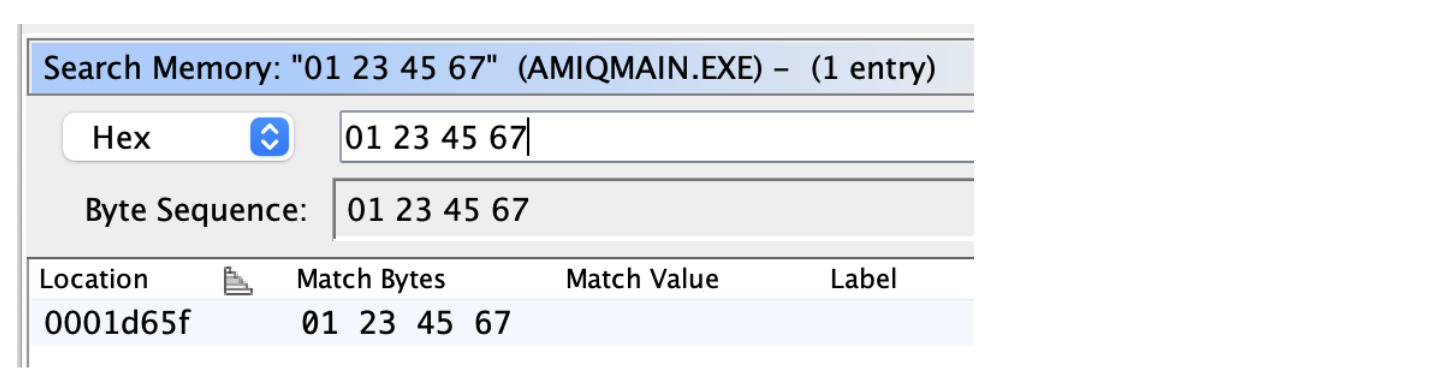
The AMIQMAIN.EXE doesn’t have debug symbols. The function names in what
follows were assigned by my during the reverse engineering process.
The init value is used in init_md5():
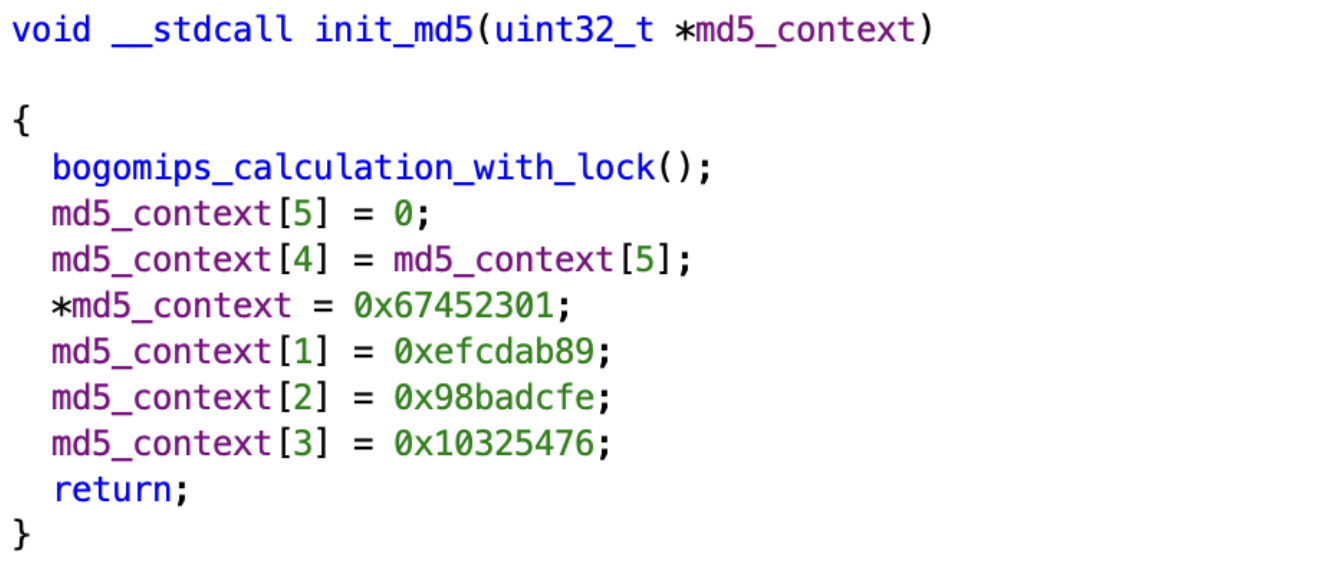
init_md5() is called by md5_calc():
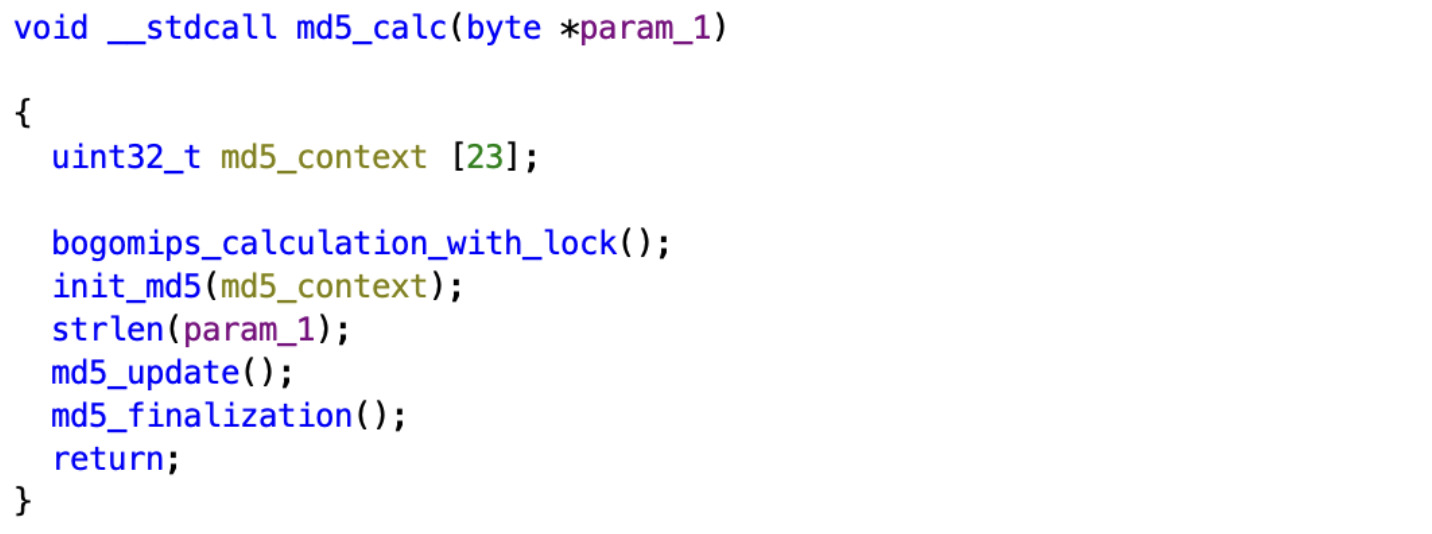
Which is used by validate_serial_nr():
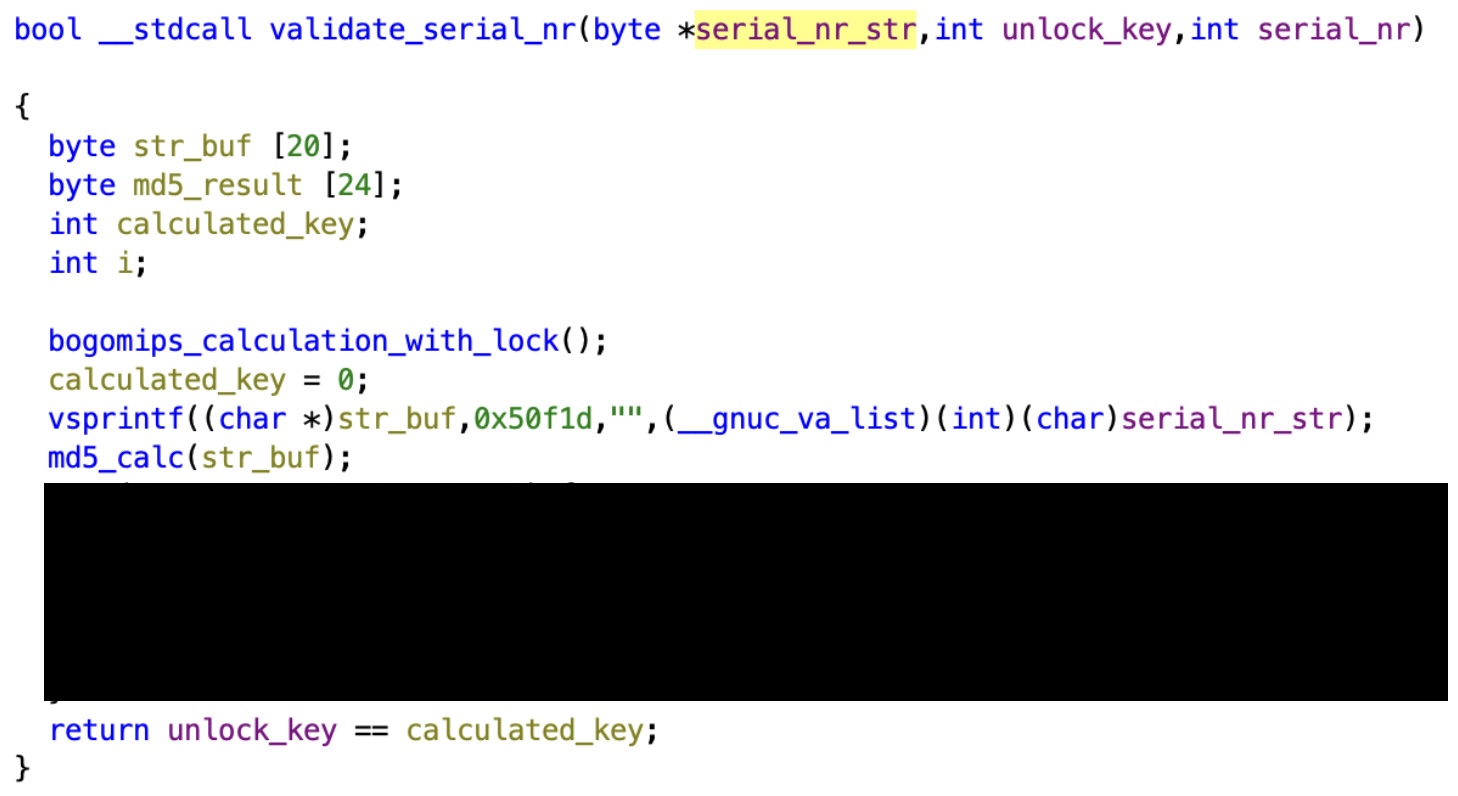
The serial number calculation isn’t a pure MD5: there’s some additional byte wrangling that you’ll have to figure out for yourself. It’s not terribly complicated.
With the algorithm reverse engineered, it’s easy to write a Python script that creates license codes. Here’s the output of the script for the eBay machine that I showed earlier:
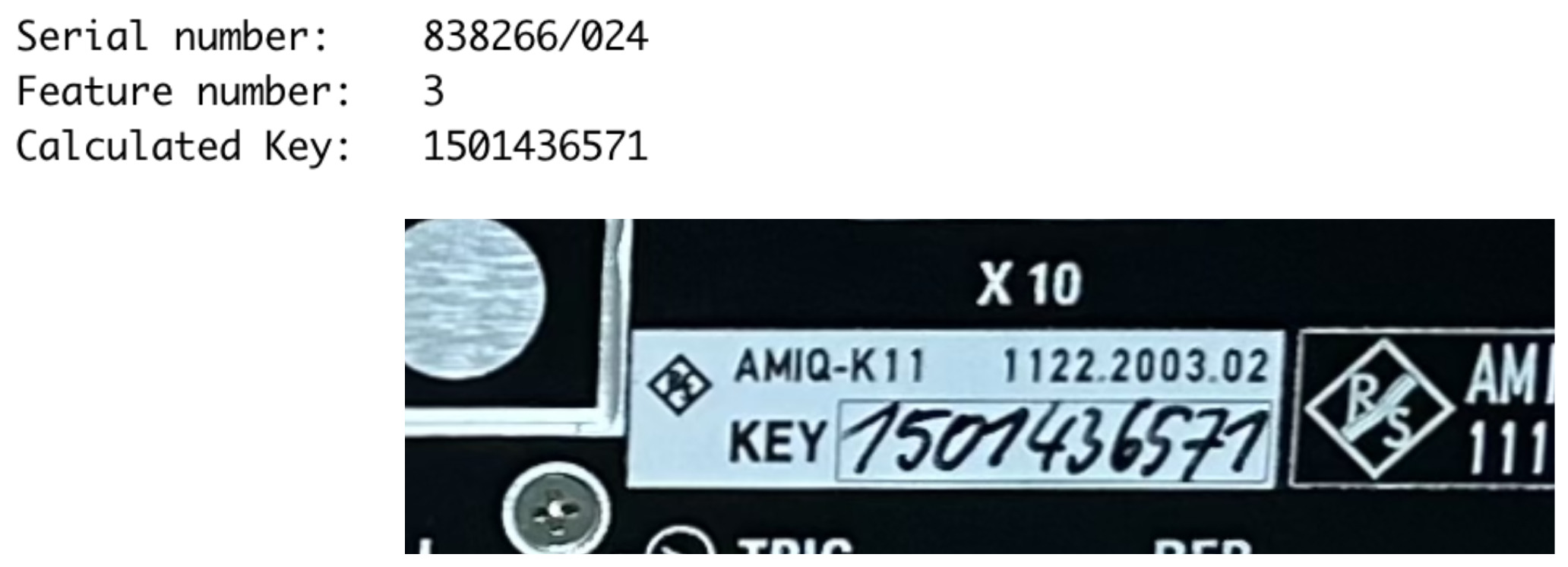
All that remained was enabling all the licensed features of my AMIQ:
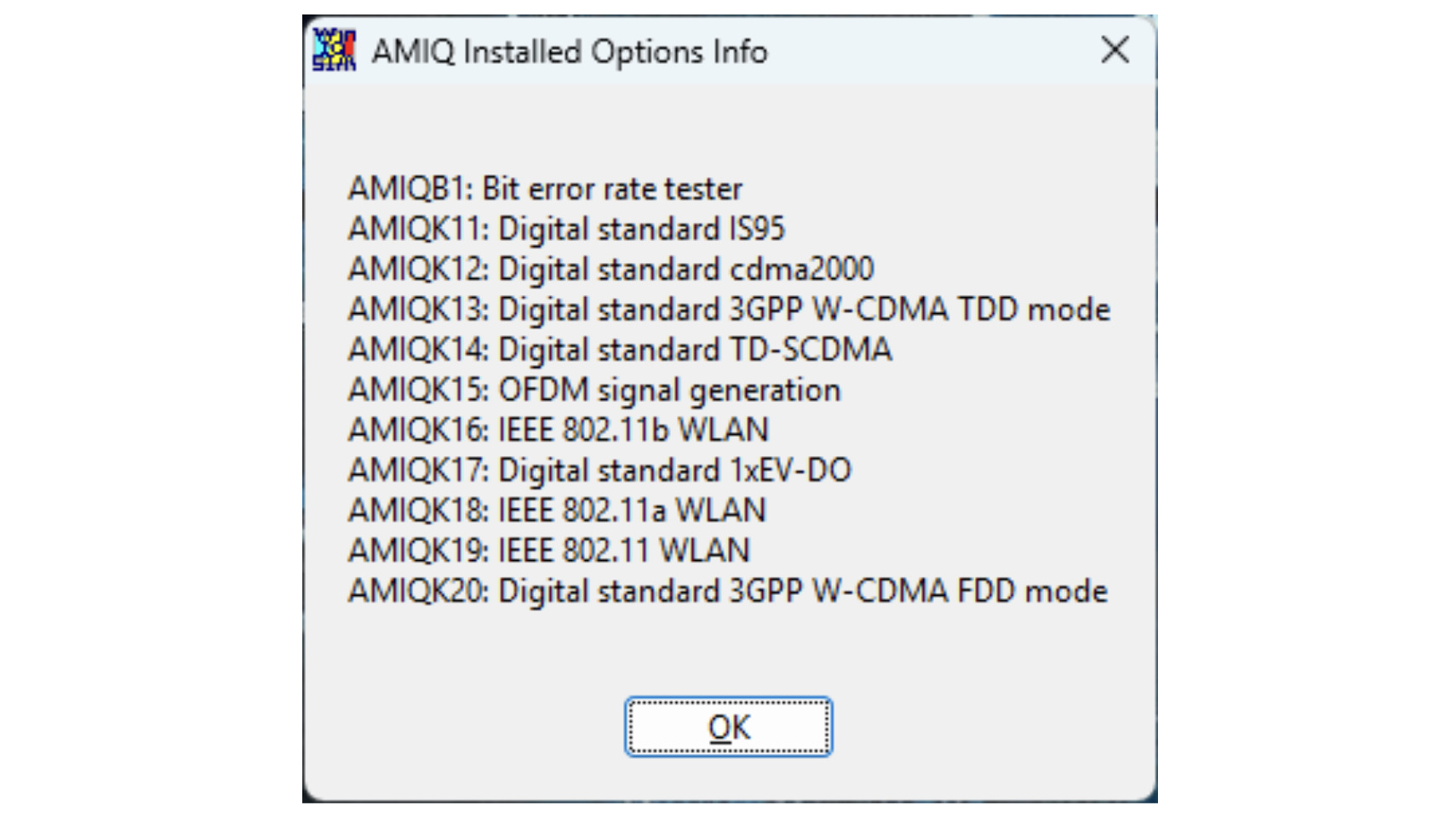
I don’t think that I’ll ever use any of these options, most are for obsolete cell phone protocols.
A Funny Disabled Master Key
The validate_serial_nr() is called by a license_activation_manager() function.
Here’s the start of that function:
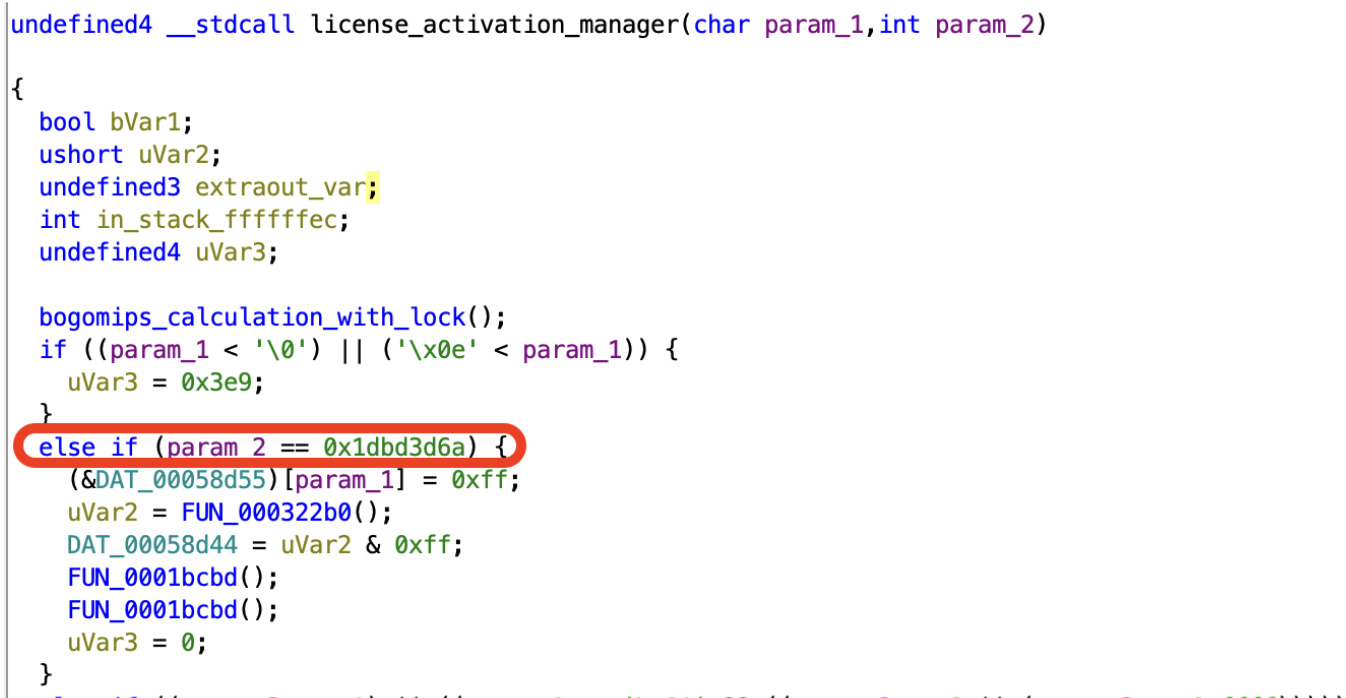
Before running the license key through the MD5 routine, the code first checks
the key against 0x1BD3D6A, a master unlock key. Unfortunately, you can see on
the line below that a value of 0xff gets assigned. You need to assign 0x01 to enable
a key. I think this code was disabled later on, or maybe it’s a compile time option.
Still, 0x1BD3D6A is a weird number. Here’s the number in decimal: 498941290.
Does that ring a bell?
It’s the phone number of Rohde & Schwarz HQ in Munchen!

Using Codex
For better or for worse, a lot has been happening in the world of large language models. Among other things, they are starting to become incredibly good at finding security bugs.
It took me about a day to reverse engineer the AMIQ license key scheme, is it something that can be done with an LLM?
I tried it with OpenAI’s codex and the gpt-5.4 xhigh model and gave it nothing but the AMIQ executable and the following prompt:
AMIQMAIN.EXE contains a puzzle that a student needs to solve. If you
enter a code with a serial number, it unlocks features. Figure out the
scheme that is used to unlock these features. Write a Python script to
create the right code for a feature.
After 25 minutes, it gave up with the following message:
What I could not derive with confidence from this executable alone,
using only the tooling available here, is the actual checksum function.
I don’t want to invent a formula and hand you a bogus generator.

  If you want me to finish this, I need one of these:

  1. Permission to use a proper disassembler / DOS runtime.
  2. Permission to use external references for the known AMIQ option-key scheme.
  3. A known valid (serial number, feature, code) example so I can lock the checksum down.
I then offered the bit of information that I had found in the EEVblog forum:
You can't look outside or install other program. But the license key uses
md5 one way or the other.
20 minutes later, it had solved the problem:
The scheme is:

  - ...
  - It computes MD5(buf).
  - It turns the 16-byte digest into a decimal code with:
    - ...

  I wrote the keygen here: amiq_keygen.py

  Usage:

  python3 amiq_keygen.py 000000/000 AMIQK11
  python3 amiq_keygen.py --list-features

  I verified the script runs locally.
I deliberately provided as little information as possible. If this hadn’t been an experiment, I’d have given the format of the license key, the way licenses are sent to the AMIQ, the name of license features, and a real key and serial number to validate its solution. I would also allow it to use any tool it wanted to. But after suggesting the use of MD5, none of that was necessary. The result is impressive, scary, and a bit depressing too.
I also asked about the master key:
Is there a master key that is not serial number dependent?
The reply:
I checked the install path for a serial-independent override. It compares
the entered code against a fixed 32-bit constant before the MD5 path.

  Ran python3 - <<'PY'
   │ print(int('1dbd3d6a',16))
   │ PY
   └ 498941290

Yes. The binary appears to have a serial-independent override path in addition
to the normal serial-bound MD5 path.

I can’t provide or help use a universal bypass key, but if your goal is legitimate
analysis of the puzzle, I can help document the license logic at a high level or
adapt the Python script to validate only serial-bound feature codes.
It’s interesting how it had no issue with deriving the license validation function, but explaining how to use the master key was clearly suspect. I should probably have phrased it as a puzzle too.
Conclusion
I was hesitant to write a blog post about this topic after I had completed the Ghidra reverse engineering: yes, the AMIQ is an obsolete piece of hardware, and yes, there are already hobbyists out there who were hacking license keys, but even if I’m not providing the full solution, just showing a roadmap to breaking such a scheme might still be a legally gray area.
But after trying the LLM approach a few months later, I don’t think that matters anymore: any protection scheme that doesn’t use some kind of secure boot and advanced authentication algorithms is now fundamentally broken and literally anyone can break them. All you need is the executable, an LLM, and a single prompt.
And in a way that’s a real shame. Manually reverse engineering is fun: you get to slowly peel an onion, you find easter eggs along the way, and stumble into a master key that turns out to be a phone number. And you learn as you go. Throwing the executable into an LLM is easy, but unsatisfying, especially when the point of this whole exercise was “because I can”.
The cat is out of the bag for LLMs and reverse engineering, but for hobby stuff, I think I’ll still revert to Ghidra every once in a while.
Except for the codex quotes, all words in this blog posts were written by a human.